Inside the Octagon - How MMA shapes young lives.
- Ryan Mullen
- Mar 28, 2025
- 4 min read

Mixed martial-arts has never had much of a glorious look about it. Most will look at the eight-sided cage it takes place in and call it barbaric without ever giving it a second thought. Most will see two men beat each other bloody and bruised over the course of 15 or 25 minutes and think: ‘There’s no good that can come of this’.
A closer look does away with that narrative entirely. All it takes is half an hour inside of a real MMA gym to change the common misconception of the sport being nothing but barbaric and brutish. A look just beyond the ugly surface of MMA will show the weeks of teamwork and preparation. It’ll show how friendships and a found family are forged through hours of working toward shared goals.
Down an alley and behind a menacing red door on Coatbridge’s Whifflet Street is Scottish Hit Squad. SHS is home to professional, amateur and aspiring MMA fighters, all working together to help each other improve. The big red skull plastered on the logo contrasts greatly with how welcoming the gym actually is.

The coaches and students alike agree that the gym is like a family, everyone working together for the better of each other. Whether it’s the amateurs coming in late on a Sunday to participate in extra drills and shore up their skills, or the pros coming together and putting the work in during a long training camp for a big fight.
In an era where most connection is done across screens and microphones, the bonds the people in this gym have feel so authentic and real. There’s a kind of integrity to a bond built on helping each other improve that you just don’t get online or anywhere else for that matter. Sports like boxing and MMA are so often characterised as lonely, isolationist. Gritty, old-school fighters would refuse to see their family because they thought it gave them an edge- but that is an outdated mindset
The young people that walk into the gym and have the will to stick to it consistently will walk out of that big red door a changed person. Everyone in the gym will tell you that training makes them feel like a more confident, stronger person, and the best version of yourself.
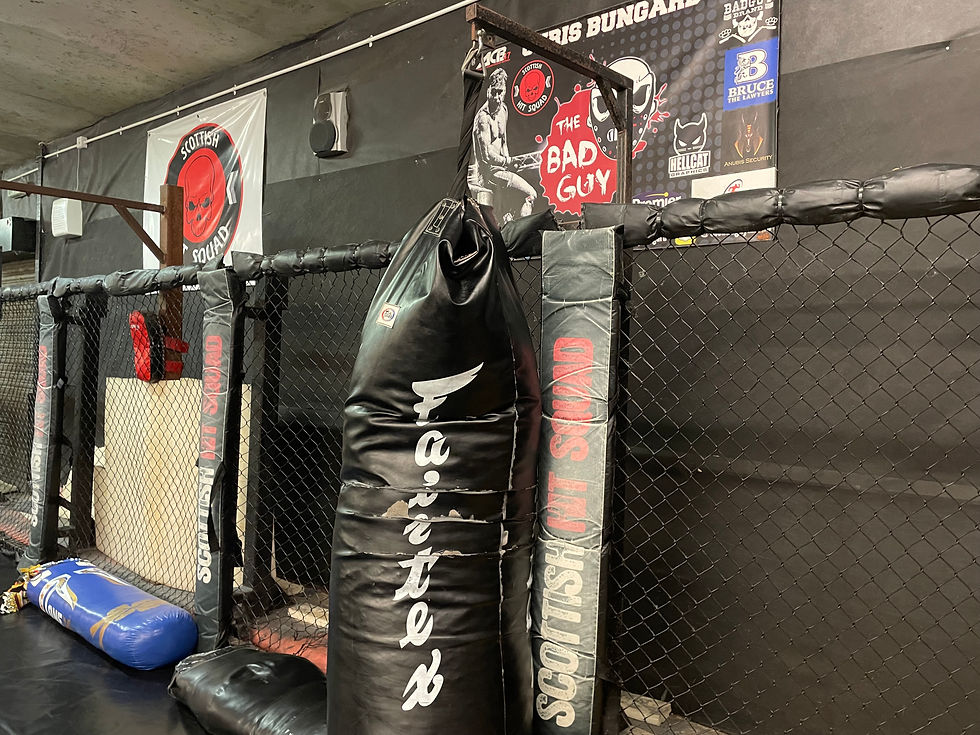
A fighter’s strength is just as much thanks to the community of their gym as it is their own individual efforts. Whether it’s nutritionists, physical therapists, sparring partners or coaches, every fighter has a team around them that helps them grow and learn about what they do best.
The preparation is nigh-meticulous, a process that’d be excruciating to go through alone. Studying an opponent, getting in shape while simultaneously cutting weight, so for a fighter to have that community around them is invaluable.
Olek Steckiewicz, 17, is an amateur MMA fighter out of SHS. He won his first fight in August of last year at Holytown Havoc 4, he has nothing but thanks to give his coaches and friends for helping him perform as exceptionally as he did.
He said: “I couldn’t ask for a better team. I get infinite help from my coaches, they help me with everything I need- It is like a family. They make me better and I’m happy to help them with any preparations if they have fights coming up as well.
“It’s a mindset of just being the best version of myself and being the best martial artist I can be.

Olek and former professional Sambist, Anton Bulkin, 34, were running extra drills on a Sunday night. At that time most would be procrastinating on school work or milking the last hours of relaxation out of their weekend before the working week starts again. But the priority in a gym like this is that the young talent gets to improve and succeed.
Anton said: “Sometimes when I show some technique, someone will come up to me and say ‘oh, I’ve used it, I got the gold using the technique you showed me’. That’s probably the best thing about it.”
The gym itself has seen people come and go, whether they’re aspiring fighters with dreams of competing or just an average person that’s looking to stay in shape. Sports as a whole are inclusive, but martial arts in particular is one that has always given young people in particular a sense of belonging and structure. The gym’s owner- and head coach -Brian Gallacher agrees.
Coach Gallacher initially found coaching as a coincidence- taking a youth class as one of the better students in a boxing gym. He said: “What got me into coaching first is when I was younger I was part of a boxing club. They asked me to take the kids classes and I started helping out in that gym.
“I transitioned into MMA and Jiu Jitsu and at the time there weren't really any good coaches, so I thought, ‘okay, I’m going to try and help bring the level up’, because I saw the level in different countries was a lot higher than us. I think we’ve done alright for it.
“I’ve seen young people who haven’t had a good work ethic come into the gym, maybe with addictive personalities. People who would normally have been taking drugs or going out drinking and seeing them apply themselves to martial arts.
“After they apply that sort of hard work ethic of showing up on time, putting in the work and giving 100% and you can see the transition in these young guys who can now put what they’ve learned towards a career outwith the gym, where you need all these qualities that they’ve learned inside of the gym.
“90% of our members don’t compete and just come here to get fit and healthy or build confidence. I’d say there’s 10% of people that actually want to compete; some of the younger guys start off in amateur, if they’re successful enough and they work hard enough then they can progress on to professional ranks.
“It’s a close-knit group of people that come in and work hard together. Everybody has common goals, so I’d say it’s like-minded people that want to achieve success within jiu jitsu and MMA.”


Comments